

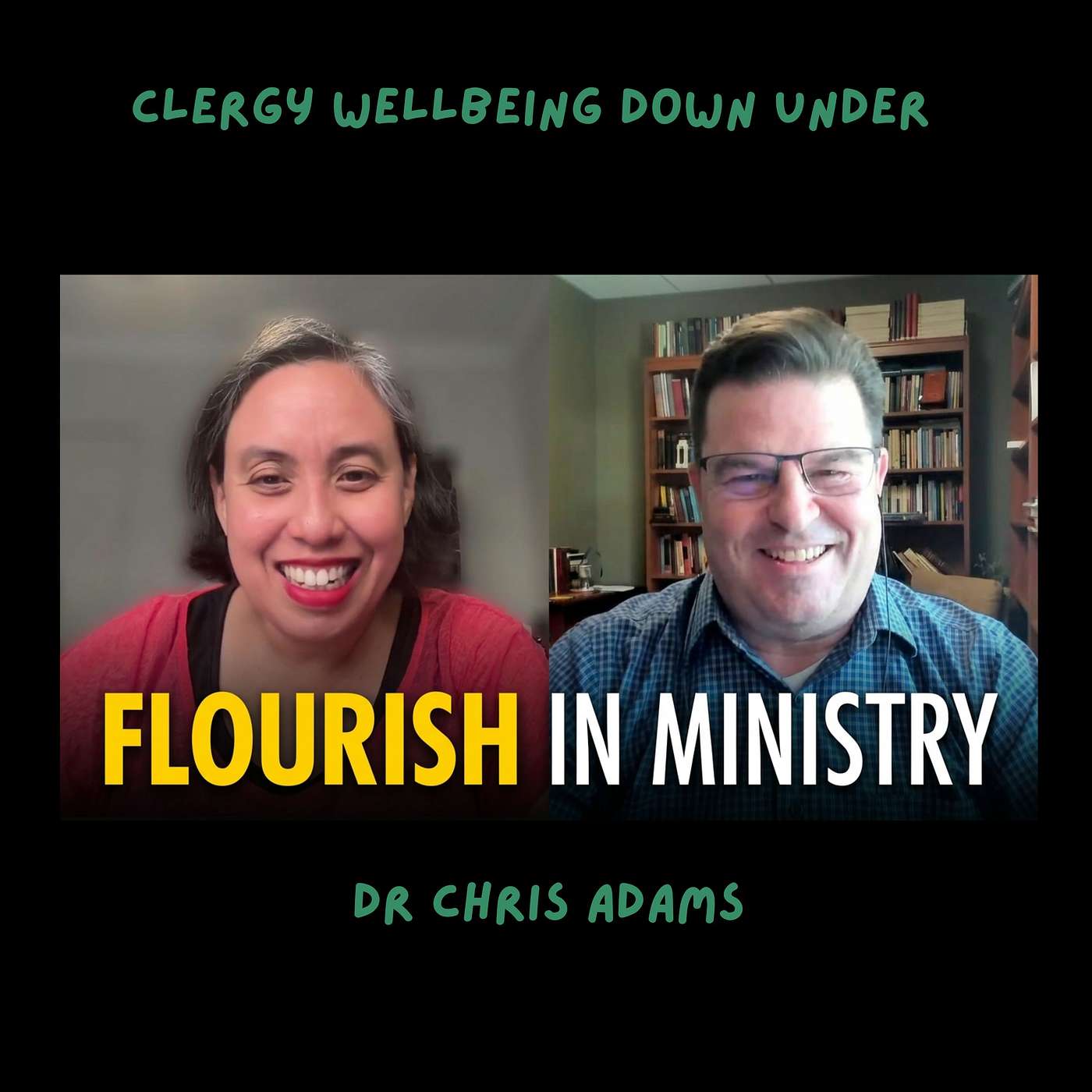
From Burnout to Flourishing with Dr Chris Adams
The Flourishing in Ministry project began over ten years ago at the University of Notre Dame. Dr. Matt Bloom, whose wife is a pastor, led a team of researchers (including Dr. Chris Adams, Executive Director) to develop insights about clergy well-being.
Dr. Adams now leads the Flourishing in Ministry project at Rosemead School of Psychology, Biola University, as part of the Mental Health and the Church Initiative. The research study currently includes over 20,000 clergy surveys and several hundred in-depth interviews with a diverse group of clergy.
In this conversation we learn about the key practices and implementable strategies that this research has found to make the difference in a flourishing ministry.
In this episode:
- The complex, multi-faceted role of pastors and how it differs from other helping professions
- The mental health challenges clergy face, including burnout rates comparable to teachers and social workers
- The impact of leadership styles—healthy versus pathological—and their effects on congregations
- The Five Dimensions of Flourishing: daily well-being, resilience, authenticity, social ecosystem, and how these interrelate
- Practical strategies for pastors to sustain daily well-being, including spiritual practices, boundary-setting, and community support
- The importance of organizational and community-level support for long-term health
- Unique challenges faced by pastors' families and the concept of front stage/backstage in ministry
- The role of relational ecosystems—mentors, friends, church community—in fostering resilience and authenticity
Take the free Flourishing in Ministry Assessment and get access to resources and tips that will help you: https://www.flourishinginministry.org/
Timestamps:
00:00 - Introduction to Dr. Chris Adams and his work on clergy well-being
02:13 - The influence of family history and pastoral lineage
03:28 - Challenges of clergy killing congregations
04:55 - How past experiences shape current research interests
06:14 - Dual focus of the Mental Health and the Church Initiative
07:44 - Differentiating ministry from other helping professions
08:13 - Unique relational demands of pastors
10:06 - The toll of role immersion and 24/7 responsibilities
11:21 - The complexity of being a pastor: job analysis insights
13:39 - Burnout rates among clergy in comparison to other helping professions
15:05 - Addressing the myth that pastors should work as hard as their congregation members
16:48 - How pastors can understand and manage their work hours
18:58 - The flourishing model: origins, survey, and key constructs
20:55 - The five dimensions of flourishing and the free assessment tool
22:45 - Insights from the large clergy dataset and the importance of cultural adaptation
24:28 - Longitudinal research findings: positive spirals and downward trends
26:09 - Building daily well-being through spiritual practices and rhythms
27:54 - Small, consistent practices that promote resilience and joy
30:24 - The role of emotion regulation, assertiveness, and role crafting
31:55 - The organizational and relational factors influencing long-term flourishing
33:16 - Societal and occupational health parallels across professions
34:54 - Organizational influences from denominational policies to community support
37:41 - The impact of work-family interference on pastors’ well-being
41:03 - Practical daily routines for managing unpredictability and maintaining joy
44:04 - The importance of perspecti
Podcast Disclaimer:
Please be aware that the opinions and viewpoints shared on this podcast are personal to me and my guests, and do not represent the stance of any institution. This podcast aims to present findings for open discussion and dialogue, inviting listeners to engage critically and draw their own conclusions. While the content serves informational purposes, it is not a substitute for professional advice. Thank you for joining me on this journey of exploration and conversation!
Transcript
A transcript is available for this episode. Open transcript ↗
Comments
Be kind. Comments are public and moderated.